Hello again!
Seems I published this a bit later than first anticipated, but I am taking my time and doing this at my own pace. After all, hooray, I am on holiday!
This entry is the extended version of this entry, and makes for quite a bit of reading. If you want to see the condensed version, go visit this link.
Since my last blog entry, where I in great anticipation outlined my plans for these last few days, I have arrived in Tunisia to a warm welcome, both in terms of hospitality and climate. I have now come to my fifth day in Tunisia, and I have visited the cities of Tunis and Tabarka. The general way that events have been transpiring the last few days have been characterised by being quite ad-hoc and somewhat surprising, to my delight. With the exception of planning ahead where to spend the day and in which place to sleep, I am in essence trying to immerse myself into the present and embrace every moment for what it is, and seize chances that may pop out to have a good time, talk to people and enjoy life. My archenemy is the organised tourist trips where you are reduced to the life of the Japan Paparazzi Tourist and every minute of your holiday is laid out for you, which in essence involves complete (take this: voluntarily) loss of freedom and having to integrate into the herd, and like naïve sheep following the tour guide and utter 'ahh, so interesting' at every futile attempt at rendering an old relic or architectural discovery somewhat interesting. To complete this endless pit of complete waste of time, you may barely be granted the privilege of getting away for three minutes (26 seconds for the recipient of great advice from the Venerated French Male Advisor) to fulfil a sometimes pressing need after a day of finely regulated intakes of water.
Anyhow, back from my admonitions of the immense pleasures of organized travel to my hitherto delightful time in Tunisia as a backpacker (or at least as a disciple of the great art of backpacking).
My first day which includes my travel to Tunisia was a partially funny and slightly bothering one: I had spent the night at my brother's movie art collective, Molloch, and with little sleep due to my late repacking of my bags (after bringing half my belongings for storage in Oslo until I move into some unknown apartment in August, in three stuffed suitcases and a backpack) and - as usual - bad time allocation and just having to watch an episode or two of Family Guy. It was funny watching the two-episode long story of Stewie killing Lois and then Lois killing Stewie. This usually small and innocent Stewie who is overly and blatantly intellectual with an outrageous British accent (hehe... subtle traces of my own English), and incredibly ego-centric, explores the pleasures of ruling the world in an intricate plot which takes two minutes to divulge. Nonetheless, the usually mediocre Family Guy episode was lifted a few bits higher by the liberties taken by the writers by the upheaval of the traditional structures in Family Guy and a funny story. On another note, the Blue Harvest episode, which parodies Star Wars, is merely a slightly entertaining experience and not an absolute must to watch.
Seems I published this a bit later than first anticipated, but I am taking my time and doing this at my own pace. After all, hooray, I am on holiday!
This entry is the extended version of this entry, and makes for quite a bit of reading. If you want to see the condensed version, go visit this link.
Since my last blog entry, where I in great anticipation outlined my plans for these last few days, I have arrived in Tunisia to a warm welcome, both in terms of hospitality and climate. I have now come to my fifth day in Tunisia, and I have visited the cities of Tunis and Tabarka. The general way that events have been transpiring the last few days have been characterised by being quite ad-hoc and somewhat surprising, to my delight. With the exception of planning ahead where to spend the day and in which place to sleep, I am in essence trying to immerse myself into the present and embrace every moment for what it is, and seize chances that may pop out to have a good time, talk to people and enjoy life. My archenemy is the organised tourist trips where you are reduced to the life of the Japan Paparazzi Tourist and every minute of your holiday is laid out for you, which in essence involves complete (take this: voluntarily) loss of freedom and having to integrate into the herd, and like naïve sheep following the tour guide and utter 'ahh, so interesting' at every futile attempt at rendering an old relic or architectural discovery somewhat interesting. To complete this endless pit of complete waste of time, you may barely be granted the privilege of getting away for three minutes (26 seconds for the recipient of great advice from the Venerated French Male Advisor) to fulfil a sometimes pressing need after a day of finely regulated intakes of water.
Anyhow, back from my admonitions of the immense pleasures of organized travel to my hitherto delightful time in Tunisia as a backpacker (or at least as a disciple of the great art of backpacking).
My first day which includes my travel to Tunisia was a partially funny and slightly bothering one: I had spent the night at my brother's movie art collective, Molloch, and with little sleep due to my late repacking of my bags (after bringing half my belongings for storage in Oslo until I move into some unknown apartment in August, in three stuffed suitcases and a backpack) and - as usual - bad time allocation and just having to watch an episode or two of Family Guy. It was funny watching the two-episode long story of Stewie killing Lois and then Lois killing Stewie. This usually small and innocent Stewie who is overly and blatantly intellectual with an outrageous British accent (hehe... subtle traces of my own English), and incredibly ego-centric, explores the pleasures of ruling the world in an intricate plot which takes two minutes to divulge. Nonetheless, the usually mediocre Family Guy episode was lifted a few bits higher by the liberties taken by the writers by the upheaval of the traditional structures in Family Guy and a funny story. On another note, the Blue Harvest episode, which parodies Star Wars, is merely a slightly entertaining experience and not an absolute must to watch.
God, am I going off track?? At this speed I'll be done by midnight and never get anything to eat this evening out in Tabarka... better get up to speed on my actual travelling!
Anyhow, after a quick three hours of sleep and a painful half-hour stroll through Oslo to its central train station, I caught up with my brother. He was going to a friend's wedding in Copenhagen, home of the Danish who fare no better than Schwarzenegger in their attempts to communicate through any word any longer than five letters. From there we went to the airport, and WOUSH, I was suddenly in London after half-sleeping through the flight. While transferring by bus from the new Terminal 5 at Heathrow (a lovely building by the way) to Gatwick, I met a British family with hyperactive children jumping up and down their seats with an evidently exhausted mother sitting in their midst just glaring out. The children were very young and very eloquent: saying 'gagaga' and 'bababa' indefatigably. Upon remarking this to the mother, she told me of their thirteen-hour flight from Bangkok, during which the children were quite more fatigued and calm. I did not pursue conversation to let her rest, and I thought of how the next few days would be for this family that soon would suffer the unavoidable misery of jetlag. Well, I am certain they are almost fully recovered by now.
 After the three-hour flight to Tunis, I barely avoided complete confusion and despair when I was picked up by Mariem at the airport, the daughter of Radhia, the hostess and friend of my family with whom I was going to stay my first few days in Tunis, just before going to get a taxi to Radhia. Radhia, being away for the day at the family farm further south at Dresden, had asked Mariem to come get me and take me to Mariem instead! And thus I avoided being dumbfounded before Radhia's empty house, but instead had the pleasure of being called over the loudspeaker system… ‘Eric Bolikokki’. One of the many mistakes people have made in the past trying to pronounce my surname of Polish origin. You can see the lovely Mariem on the left. (Mariem, cette photo est absolument charmante! Desolement je n'ai pas pu trouver grande autre chose, desole!)
Mariem took me to the house of herself and Ghazi, who she married just last May in what seems to have been a splendid wedding, followed by a trip to Costa Rica. Congratulations anew to you!
 After spending a few hours at the house, taking a very pleasant shower, chit-chatting and giving Mariem and Ghazi a book from the stunning “In the Wild” nature photo exposition currently touring the world and presently located in Stavanger and finally grabbing a bite to eat in town (La Marsa), we went out to an Electro-Jazz concert with the fascinating Celia Mara from Brazil (there’s music on her myspace page for those of you interested: http://www.myspace.com/celiamara1/). The concert, being quickly improvised and taking place at a hotel, unfortunately hosted but a small audience. To my disappointment, the Jazz festival that was to take place in the Northern city of Tabarka, which I was planning to attend, had been cancelled due to lacking funding. Having happened in the last minute, this lovely Brazilian woman found herself in Tunisia with her band but no gig! With alternative rhythms, punchy trumpet, creative DJ, enthusiastic band and great voice of Celia Mara, we enjoyed sitting there with our cold beers (more to come on the alcohol issue of Tunisia) and tuning in on the music. After a while, Mariem shoved me out onto the dancing floor, and after a while a small group of us found ourselves dancing to the beat. Most people continued to sit around, as the Celia Mara group really wasn’t in a suitable place at all (for one, the electricity went out a couple of times and the DJ didn’t have a turntable) and with a large enough audience, and their full potential was not reached at all. However, we had a wonderful talk with Celia Mara after the concert, and she extended an invitation to come see her if I ever was in Brazil!
 During this first day I also learned about the extent to which Facebook is a popular phenomena here in Tunisia, with people using the channels of Facebook extensively for communication, discovering new people, attending events, et cetera. My impression at home is that Facebook has more or less been too much, and the initial wave of interest and Facebooking tendency has been somewhat reduced. Here, constructive use of Facebook is taking place. However, this may also be due to the large censure measures in place here in Tunisia; TV channels are owned by the state (residents use satellite dishes for getting more news & entertainment), newspapers are heavily controlled, and in general reporters, human rights groups and other factions that may have views conflicting with those of the government or wanting to express concerns, are tightly kept in reins (but don’t worry about my blog, I’m merely a passing tourist).
To my surprise, the typical image of Tunisia as a country in which over 90% of the population adhere to Islam, and one would expect alcohol to be quite limited (alcohol is prohibited under Islamic principles) and more or less only restricted to tourists only, is a false one. As one of the most liberal Islamic countries, the new and young generation increasingly embrace Western culture and customs, and alcohol consumption is widespread. Nonetheless, this is something that is attempted to be held in check by tight alcohol serving licenses, prohibitive and inflated taxes on imported alcohols, liquor and beer, no sales on Fridays, and a general situation that renders acquirement of alcohol difficult. Especially liquor.
 The next day, Sunday, I joined Mariem and Ghazi for their Sunday excursion to the beach. After one hour or so of driving, we found ourselves in the midst of a complete car jam! Ghazi was shocked to find that the beach we were going to, which normally was quite a secluded and calm place with few people, made inaccessible to many by the distance from the capital which made going by car a requirement and generally being simply quite little well known, was now crowded by people. The beach parking (and I presume the beach itself) was completely saturated, and there was no way we were going to be able to park before at least an hour of waiting. After advancing at a snail’s pace for a while, we turned the car around. Even in the outbound direction there was a queue! In the scorching heat of that Sunday, too many a person of Tunis with a car had fallen to the prospect of a nice, relaxing day at the beach.
However, with the ingenuity of my hosts, a solution was quickly found! After driving a bit we spotted some local fisher sons, and after some discussion and practicalities being put into order we soon were on the boat puffing towards a elongated, arch-like isle on the temptingly beautiful and warm water. But the last surprise of the day had clearly not yet arrived; while preparing to leave with the boat, a car came driving up the road and there, some friends of Mariem and Ghazi appeared! Apparently, the friends had themselves planned to use this very boat for the same purpose we sought it out, and had even contacted Mariem and Ghazi earlier that day to invite them to come along for the ride! But Ghazi had not seen the message, and completely oblivious of his friends’ invitation, we had gone ahead with our own plans. What a coincidence then, can you imagine, that these very friends came driving at just the right moment? We then proceeded to board the boat altogether, and I exchanged salutations with the newcomers.
 The day that came to be then consisted of some lovely time spent on the aforesaid isle. We ate some delicious sandwiches, a small delicacy in themselves, with the spicy Merguez (forgive me for any misspelling) sausages topping the savoury experience. The water was amazing and certainly of a very agreeable temperature for a man of the North to bathe and splash around in. Mariem told me that the maximum temperature had not even been reached yet (wow!). Some fine reading also took place under the sun, which by then had reached a comfy temperature. I took some time to wander along the beach (does not fracking everybody thoroughly enjoy ‘long walks on the beach’?) with a long stick and wrote meaningless patterns into the sand, but something that I found very relaxing. I drew some houses and stick persons, as well as (please kill me) the harmonic series, and an analysis of the sin and cos functions in graph form. Allegedly, Aristotle was known for discovering and contemplating the great mysteries of geometry in the sands of Ancient Greece. Perhaps I am the advent of a similar genius?
The same evening I accessed my IB results! In total I received a 38 of 45 possible points. The results were also somewhat surprising, with a 7 in Norwegian and a C in Extended Essay. In Norwegian, I had really prepared myself for an exam retake at a later stage due to not being very well prepared, but it would seem that I did manage to perform proper analysis and essay writing at my exams. So there I am happy. My extended essay could have gone better, and I was also hoping for a 7 in Chemistry, my favourite subject where I had quite literally worked my ass off. I also had some excellent exam preparations in Chemistry and Physics with my good friend Jørgen, who I met three times a week for highly constructive revision work. This ensured that we both were very well prepared before the exams (Jørgen, you must tell me of your results if you read this!). I did commit quite a grave error at the last exam, when drawing a dehydration process, but then I had hoped that this wouldn’t be too bad a flaw. Nonetheless, I am very satisfied with a 6, quite a good grade and achievement at the IB. I also managed a 6 in Physics. I will not pursue to take Chemistry or Physics exams anew, or any other exam for that sake. In French, I received a 6, although I here too had really hoped for a 7. If it were to be really needed for entering into a university in the future, I might take this exam again to raise the bar a bit. A very pleasing result was from my TOK Essay, which received an A! My essay, about how orthodoxy and heresy exchange as time passes in the fields of History and the Natural Sciences, can be seen by clicking here (Huaytacha, did I make you read it yet?).
The next day, Monday, I was kindly picked up by Radhia who brought me into central Tunis, not far from the souq, the central and traditional which may be found in many greater cities in Northern Africa and the Middle-East. The souq is located in the medina, which is the designation used for the older part of a city or town in this region. The medina follows an old design principle that has pervaded the region for long; in the heart, one would find the mosque, the place of worship for every Muslim. Imagine a watermelon; in the centre the most delicate part is situated, with several layers surrounding the core. Going outwards, the layer become less edible and cruder. This model resembles that of the classical medina; the more noble and refined trades were located around the mosque, with candles, incense and objects for the rites of worship, while dirtier businesses such as tanners or black-smiths stayed on the outskirts. In the middle layers one would find in decreasing order of ‘social hierarchy’ books, clothing, furnishings, domestic goods and utensils.
Before venturing into the medina I went to a local library to see whether my wish of trying to learn Arab from the ground could be satisfied. Mariem had expressed scepticism as to the availability of course books accompanied by CD’s, but to my great pleasure this was available. In the library, I also had to quietly laugh when I saw a software package lying around: a program offering to check whether your PC would be able to make it through the year 2000, when people were afraid of massive computer collapse, due to what colloquially (thanks to Solveig for teaching me this wonderful word J) is known as the ‘Y2K’ bug. Some actually collectively committed suicide at the transition to the new millennia from fear of an apocalypse. Poor cretins.
Some of the written Arab courses the library offered included tapes, which indicated a slight backwardness. Nonetheless, I successfully found an Assimil course, which will teach me to speak Arabic with a ‘qualified’ native speaker carefully expressing sounds. I have observed that some Arabic sounds are not even close to any English or European for that sake, counterpart. One is a kind of guttural sound that can remind you something of having to vomit. Delicate.
But, I will persist in my endeavour to try to learn Arabic. It is a lot of work, having to learn a whole new alphabet, and a language far, far away from the Latin root of the four languages I know how to speak: Norwegian, English, French and Spanish. When I learned Spanish two years ago, I made constant use of French, which has a vast number of similarities to Spanish and thus facilitates the process to a huge extent. Here, I am without any base whatsoever, and thus I need to learn all from scratch. Knock on wood.
Sarra, the long-time friend of my mother and connection to the friends I now have in Tunisia, has told me that she will refuse speaking French with me so that I really have to learn this exotic language. Ah, for those of you who didn’t know; Tunisia is a former French colony, and one of its long-lasting legacies is the ubiquity of the French language; everybody learns it as a second language in school, and I can therefore communicate with everybody without great difficulty. English is widely spoken at a reasonable good level among the educated, but by no means by everybody.
The kind of Arabic that I am currently learning is in fact called Modern International Arabic, an official form that all 22 Arabic-speaking countries share. It is the Arabic used in writing, in the news, and all official and foreign communication. There exists local dialects of this, e.g. Tunisian, which has its own particularities (but which does not have a written form). But everybody here will comprehend the Arabic that I’m learning, and by learning this Arabic rather than the native Tunisian, I will be able to communicate with people in a variety of countries and situations. Arabic is one of the most widely spoken languages in the entire world, aside English and Spanish.
Back from the pleasures of learning Arabic to the day in Tunis;
Walking towards the medina in the hot Tunisian sun caused me to begin sweating like a pig. On my way, I had kept as much as possible in the limited shade provided by the large main street in central Tunis (something like Karl Johan in Oslo) to avoid sunburn; the day before I had smeared myself with sun lotion, but not this day, in hope of perhaps getting only slightly tanner by intermittent exposure. I was thus relieved when finally entering the medina in the very old part of Tunis, which with its tight streets and careful design actually has a cooling effect. “The deep, narrow streets keep the sun’s rays from the centre in the day,” the Lonely Planet Tunisia guide eloquently states, “and draw in the cool evening air during the night. Earth, stone and wood were used to absorb water, which then evaporates and cools the surrounding air”. In both old and newer times, this cool refuge was a good place to go for refreshment among fellows.
 Upon my entry, I immediately found myself in one of the popular tourist streets, Rue Jemaa Zaytouna. As I said in my first blog entry, the local merchants learned a long time ago how to exploit tourists coming in with loads of cash and often sell merchandise for appalling prices. And this has contaminated and erased the distinction between local Tunisians and tourists: tourists are not the only ones facing mounting prices, as some Tunisians are also being tricked into paying outrageous prices and generating huge profit for the merchants in the markets. Even my friendly hosts have sometimes fallen for these petty tricks. On one island in particular, with a small and fragile local economy, the buying-power of tourists pouring in is causing it to be increasingly difficult for locals to survive through normal means, and in a concrete example, fishers that have followed tradition for over 2000 years now find that a yacht marina suddenly take up their space and they, like others, have to move to less desirable areas.
My journey into the medina began by a man starting to walk beside be, insisting that he worked at my hotel, and that he wanted to show me the mosque in the centre of the medina. And, that there was some kind of festival. There seems to be an endless row of festivals that may materialize in a few seconds out of the minds of people; the festival of the mosque, the festival of the carpets, the festival of the wool ad nauseam. Clearly, ‘festival’ has another definition for many people here, and I will have to seek to weed out its exact definition. But I believe it would be something close to ‘nonexistent event with the sole purpose of extracting money in collaboration’. Clearly, this man was trying to rip me off. Something which was quite clear when he said that he worked at my hotel, when I very well knew that I was staying at a private home in La Marsa. He angrily looked over his shoulder at me when I quietly dismissed him, making some excuse that I wanted to go at my own pace and look at all the stands along the medina street.
 I then spent perhaps half an hour in a bazaar, a large room in a house adjoining the main tourist street, into which I was almost literally dragged by some overly friendly men. One feels overwhelmed by the men who beg only one minute of your time, and insist that you come into their shop and check out what they have to offer. With large hand gestures, and collectively exerting pressure (the owners of larger shops always seem to have brothers, friends or co-workers ready to help out), you feel sorry for simply walking away. And after all, after having come to the market to see the market, one has to enter somewhere.
Now, seeing that they have bait on the hook, they will pursue what they hope will lead to a sale by starting to talk about their high-quality merchandise, point to different hand-made products just waiting to be sold, and tell how their quality, of course, is better than everyone else’s. And they will almost most certainly try to toy and charm you by talking about your home country, which in my case everybody thinks is France. It is a delightful routine correcting them, stating my origin as a Norwegian, and (this seems to be a really universal topic) answering to questions about the weather, telling them about how cold it is. I think that I even in one case told someone that polar bears do not wander the streets of Norwegian cities, perhaps ironically or dispelling a preconception.
In the bazaar, peering around the shelves loaded with hand-made crafts in a large variety of colours; chests, traditional clothing, beautiful glass and crystal, ornamented and opulently decorated bowls that come in all shapes and sizes, black figurines, postcards, mugs, and ash trays, I tried to select some souvenirs that would look good in my future apartment in Oslo. After all, there was so many nice things to bring home and I must say I have come to grown fond of Arabic and Tunisian craft, culture and language. In the bazaar I was offered some very good mint tea, the distinct and reputed drink of the Arab world, which I enjoyed, and some fresh water in a good old (I think) clay cup that soothes the water. Then, after looking around and receiving numerous descriptions from the shop owner, I bought the object you can see in the image on the left; a very nice, deep-blue, star-shaped plate with several small removable bowls that fit exactly on the plate. Perfect for serving different kinds of nuts and snacks at the same time, or simply a piece of elegant decoration. I also bought a similar, elegantly painted salad bowl which can either be used or strung up on the wall. I had a fun time haggling for the specified price, managing to lower it by about 50 dinars: about 200 kroner. Nonetheless, I felt I maybe did pay to high a price. Will have to see about that in the near future.
 After the buy, the men insisted I come along to a carpet shop, and I toddled along. There, knowing silently that I would not be able to afford a large carpet and not in the mood to haggle anymore, being somewhat exhausted after the effort to withstand the onlooking people in the previous bazaar, I only discussed the different carpets, their patterns and manufacturing process with the merchant in the indeed very large carpet shop I was taken to, rather than intent on buying anything. Again, I was served mint tea. Subordinate employees ran around, rolled out a number of beautiful and richly decorated carpets that I was allowed to touch, look at and feel in detail. One that I liked in particular can be seen in the picture on the right. Towards the end of the session, they packed together different carpets tightly and handed them to me, so as to allow me to feel their weight. But when the manager and the employees found out that I was not actually going to buy anything, with me promising to perhaps drop by at the end of my stay in Tunisia and buy a carpet if I had enough money (which I genuinely meant), they turned angry and insisted that we reach some kind of arrangement. Ultimately, I had to explicitly state I was not going to buy anything there and then, neither give them half the sum for a carpet as a sort of guarantee for that I would buy one, and all hospitality faded. I found my way out by myself, relieved to be on my own and free of the mental pressure of having to actually buy something.
 Continuing to wander around in the medina, I eventually became hungry and turned to a local restaurant. I sat down and had some rice, escalope de dinde (dunno how to exactly say that in English), and the delicious very spicy harissa, all of which you can see in the picture on the right. All of it was very good, and I was happy to spice my food with harissa; I am definitely going to bring some of it back home. I also talked to one of the waiters, who sat down with me, and we talked about different places in the medina and in Tunis. He looked at pictures in my Lonely Planet guide, and began describing several of the local sights. This was very delightful, speaking to a local and learning things from another perspective. He, as all the others I have also shared this with, was very glad to hear that I was trying to learn Arabic, and I showed him my exercise book. Everybody in such cases try to teach me a few words, which I readily absorb (but often quite easily forget – I am going to buy a notebook in which to note down all new words to consolidate my vocabulary as soon as this entry is finished). This man, whose smile and interest in what I was doing in Tunisia provided warmth and I felt glad. This really exemplifies the general generosity and hospitality of Tunisians. Even among the merchants who try to win everything from visiting tourists, one can find a lot of kindness; what they do in the markets are merely a custom and what they do. In their personal lives, one may experience something a whole lot different.
 After having spent my day in Tunis, I returned to Mariem’s and Ghazi’s house by train, and had one of the best showers I have had for a long time, rinsing myself of all the sweat of the journey. Really, carrying around bags in the heat in Tunis can be really quite demanding!
Now to round up my blog entry as fast as possible, after having written over four thousand words… so the next descriptions won’t be as elaborate.
During the evening, we had a nice barbecue party, where several friends of Mariem and Ghazi came and visited us. The discussion that endured the whole evening touched many subjects, perhaps most interestingly the education system of Tunisia. Contrasting and comparative views of the French and Tunisian system were presented, which I quietly listened in on, not having much to contribute to the discussion. I also learnt the fascinating story of a Swiss woman who had eventually settled in Tunisia, after a turbulent past.
The next morning I went into central Tunis and caught a louage to Tabarka. The taxi trip to get to the louage station was fun, talking to a taxi driver. When I broached the subject of football, quite a discussion followed about Tunisian football and how corrupt the system of football clubs can be, with players being bought & sold for ridiculous prices.
A louage really is a kind of shared taxi as large as a minibus, which goes from one city to another. Before going, they congregate at once central spot, and a queue of louages form. They fill up the first one, and when full, it departs to its destination. The next one is filled up and then departs, etc etc. This can really be quite the experience, sitting together for some hours while travelling, and on many occasions one gets to speak to locals, which is almost without exception a rewarding experience here in Tunisia. Again, the population is in general very open and readily talk to you without hesitation, and this openness is what pleases me most about this country. It makes it so much more pleasant to travel, as one so easily meets people and can talk to them. On the louage, I sat besides a woman and her daughter. The woman gratuitously shared a sandwich with me, which I accepted. It was a nice sandwich!
On my way, I slept a bit and spent some time reading in The Alchemist by Paulo Coelho in French. After arriving, I went straight to the hotel that I had selected from my guide, and rented a cheap room for about a 100 kroner a night. Tabarka really is quite expensive a town relative to others, with a lot of tourists coming through. Going to other places, I might get a decent room for as little as 40 kroner. It does give certain benefits to be from Norway, where the living standard is quite high and a Norwegian salary is worth quite a lot in developing countries. This issue I also have discussed with people.
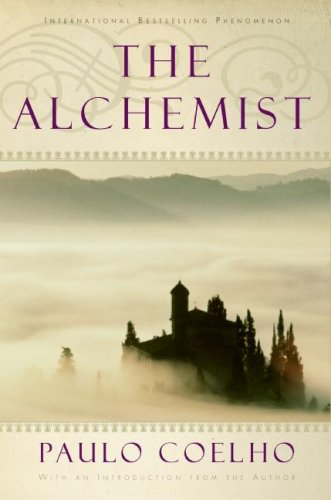 In Tabarka, I have stayed quite a bit in my room, as it is a calm place, and I have had the opportunity to simply read. I received an impulse to do so, as during my time at the IB I did not have many opportunities to read freely what I wanted. I have finished reading The Alchemist, and I am now halfway through The Lemon Tree, a combined history book and biography of two families and a work of non-fiction telling the story of the conflict between Israel and Palestine in great detail, but with a reconciliatory view and objective and purely factual narrative. The book also tells the story of two families, Jewish and Palestinian, and how they both suffered greatly. It is truly captivating and stimulating, and I always look forward to its next pages.
The Alchemist was very interesting, a deeply evocative and spiritual story of the discoveries of a young man whom adventures and finds the virtues of life. I will have to think more about this book, as it is quite deep. By Paulo Coelho I also bought The Zahir while travelling through London on my way to Tunisia, and I think that will make an equally interesting read.
 In Tabarka, I’ve also wandered around a bit, and yesterday I ended up buying a small lovely carpet. The price I managed to nearly halve, so I think I ended up with a good deal J Only 40 kroner, actually. The men in the carpet shop told me I was a “tough negotiator”, but ended up having big smiles when I walked out. A good deal closed for me, and for them.
“Three things, the older they are, the better they are: the well, the hammam, and the friend” - Arab Proverb
The hammam is what I intend to visit tomorrow. I will let you find out what it is on your own if you’re interested, as I am completely mentally exhausted after writing for quite some time now! Nonetheless, it is actually quite fun to write these blog entries, and the memory that they will carry for the future will be great to look back at. That's also why they so some extent are so bloody long!
At last, thanks to Lonely Planet for an excellent Tunisia guide book! Lonely planet really is the authority and exhaustive source of knowledge for the traveller going virtually anywhere (even for Norway there exists a guide book), and provides history, maps, sleeping places, information on locals and customs, eateries, and all one might need while exploring somewhere. A lot of what I am writing here is what I have learned through background reading in my guide, which was well worth the buy!
I'm off to sit by the beach and practise my Arabic with my newly bought notebook :) Then, I'll go get something good to eat! Yummy :)
See you next time
- Joyous salutations from Eric
PS! Please write comments! You can do so by clicking the "COMMENTS" link right below this text. Click the "Name/URL" checkbox; there you can write your name without having to log in or anything of the sort. You'll be able to see other's comments and write your own :)


2 comments:
gratulerer med godt resultat! etter mitt vit er ein sjuar i norsk meir verd enn ein sjuar i kjemi eller fysikk, men det seier kanskje meir om kva delar av kunnskapsverda eg verdset enn noko anna. kva har du tenkt å gjera etter neste år?
Gralla med fantastiske karakterer! særlg i norsk som er såviktig!
Post a Comment